

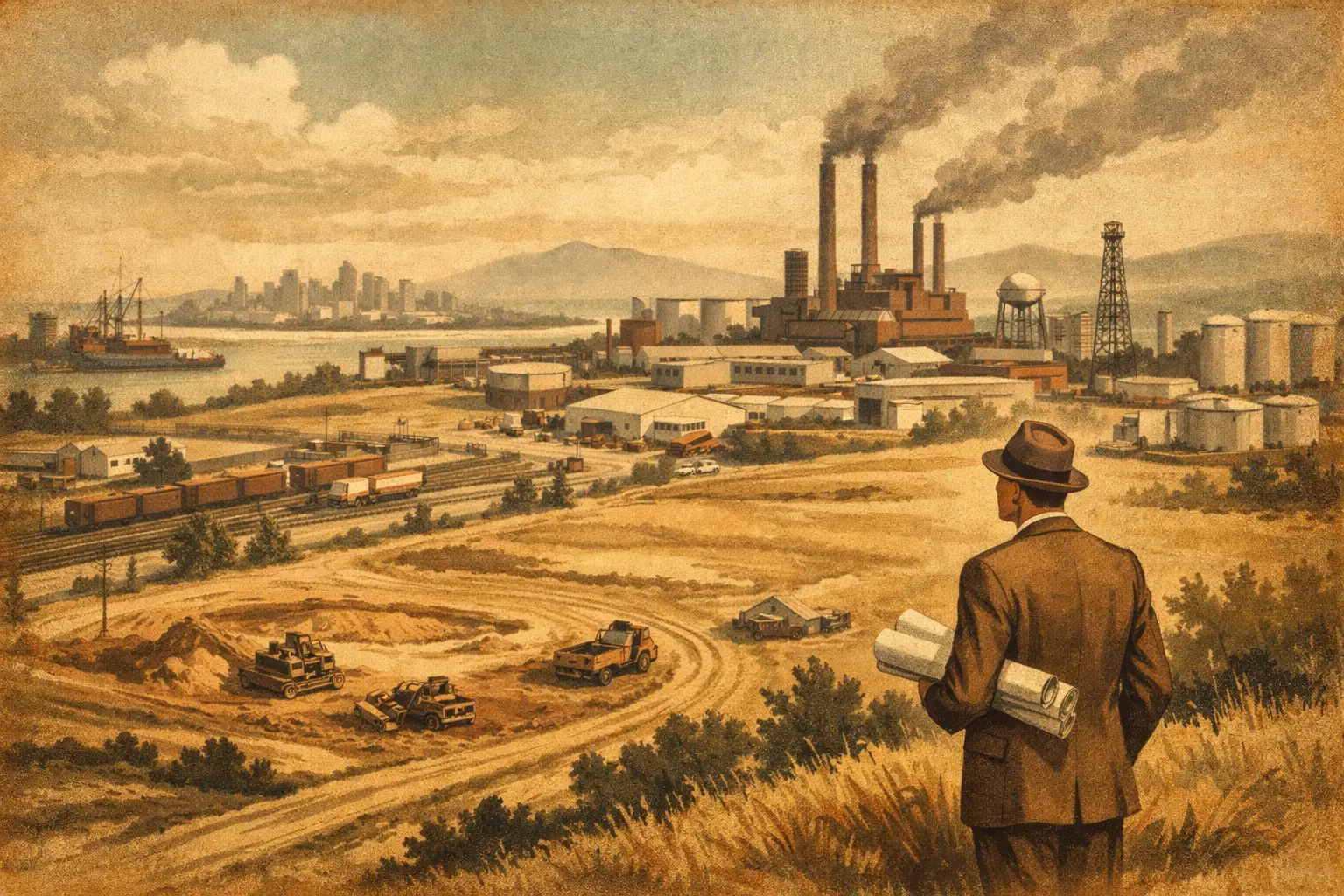
A manufacturing operation can outgrow a site long before the building reaches the end of its useful life. A distribution tenant may need a higher-clear facility, more trailer storage, improved interstate access, or power capacity that an otherwise sound property cannot provide. That is why industrial demand is more than a market headline. It is a practical force that affects occupancy costs, asset value, development timing, and the long-term usefulness of real estate.
For owners, investors, developers, and operating companies, the relevant question is not simply whether industrial space is in demand. The better question is what kind of industrial space is needed, where it is needed, and whether that demand can support a durable real estate decision.
Industrial Demand Is Not One Market
Industrial property is often discussed as a single asset class, but demand varies considerably by user, location, building design, and infrastructure. A climate-controlled food distribution facility, a light manufacturing building, a heavy industrial yard, and a regional warehouse may all be classified as industrial real estate. They do not compete for the same users or command value for the same reasons.
The strongest demand usually occurs where a building solves an operational problem. For a manufacturer, that may mean dependable utility service, ceiling height, loading configuration, employee access, and room for equipment or expansion. For a distributor, proximity to major highways, efficient truck circulation, dock positions, and reliable labor access may matter more than architectural finishes or office build-out.
This distinction matters when evaluating a sale, acquisition, or development opportunity. Broad vacancy statistics can provide context, but they do not replace an analysis of the subject property’s actual competitive set. A well-located 100,000-square-foot distribution building may face a very different demand profile than a smaller industrial service building several miles away.
What Creates Lasting Industrial Demand?
Demand becomes valuable when it is connected to an economic driver with staying power. A short-term search by one tenant can tighten a submarket temporarily. Sustained demand is usually supported by business expansion, supply-chain investment, infrastructure, population patterns, and a location’s ability to serve a broader region efficiently.
Transportation and Market Access
Industrial users measure location in time and cost. Access to interstate corridors, rail service, ports, airports, and major customer bases can reduce freight expense and improve delivery reliability. In Mississippi, properties positioned to serve Jackson, regional distribution routes, and manufacturing corridors may have an advantage, but access alone is not enough. A site must also allow trucks to enter, circulate, load, and exit without operational friction.
A property near a highway interchange can still lose ground if its drive access is restricted, its roads are inadequate for heavy traffic, or surrounding uses create congestion. Site selection should test the full path of movement, not just the distance shown on a map.
Utilities, Capacity, and Site Readiness
Many industrial requirements are difficult or expensive to correct after acquisition. Electrical capacity, natural gas availability, water and sewer service, drainage, environmental conditions, and zoning can determine whether a site is usable for a specific operation.
This is particularly important for manufacturing and processing users. A lower purchase price may look attractive until the buyer accounts for utility extensions, grading, detention, road improvements, permitting delays, and required environmental work. The right site is not always the least expensive parcel. It is the parcel that supports the operation with the least risk to schedule, capital budget, and future expansion.
Labor and Operating Costs
Industrial demand also follows labor. Employers need a workforce that can reach the facility, particularly for shift-based operations. Commute patterns, wage competition, housing availability, and nearby employers influence whether an operation can staff and retain its workforce.
Property taxes, insurance costs, maintenance obligations, and energy costs deserve equal attention. An industrial facility can be functionally ideal and still underperform as an investment if operating expenses erode the expected return. For owner-users, those expenses affect business profitability. For investors, they affect net operating income and the property’s eventual sale value.
Reading Demand Through the Right Market Signals
Vacancy rates and asking rents are useful, but they are lagging indicators in many markets. By the time a published report shows tight conditions, the best sites may already be controlled and construction costs may have adjusted upward.
A disciplined demand analysis considers current transactions as well as future supply. Are comparable buildings actually leasing or selling, or merely being marketed at ambitious prices? How long are qualified users taking to make decisions? Are tenants renewing because suitable alternatives are scarce? Are developers adding speculative space, and if so, is the new product aligned with the needs of local users?
Absorption should be examined carefully. A large lease can change the numbers in a small market, but one transaction does not necessarily establish a new baseline. It may reflect a unique user requirement that cannot be repeated. Conversely, several smaller transactions across similar properties may point to a broader, more durable need.
For investors, lease structure provides another important signal. Longer terms, creditworthy tenants, defined expense reimbursements, and renewal options can turn tenant demand into predictable income. However, a long lease does not eliminate risk. The building must remain useful at the end of the term. A highly specialized facility may generate strong current income while offering a limited pool of replacement users.
The Supply Side Can Change the Equation
High industrial demand often invites new development, which is generally healthy for a market but can alter the position of existing assets. A new building with greater clear height, modern loading, stronger power service, and better truck courts may command tenant attention even if older space remains functional.
That does not mean every existing building is obsolete. Many users value lower occupancy costs, established locations, or features that newer facilities do not offer, such as outside storage, rail access, or a configuration tailored to light manufacturing. The issue is whether the property has a defensible advantage relative to the new supply.
Owners should monitor planned projects, available land, entitlement activity, and construction costs before assuming current rent growth will continue. New supply can relieve pressure quickly in some submarkets. In others, a shortage of entitled land, infrastructure limitations, or high replacement costs may protect existing assets for years.
How Owners and Investors Should Respond
When demand is strengthening, the instinct is often to raise rents or sell immediately. Either move can be appropriate, but timing should follow a property-specific strategy. An owner with below-market leases may benefit from renewing selectively, improving the asset, and capturing higher income over time. Another owner may find that strong buyer demand offers an opportunity to sell before significant capital expenditures become necessary.
Capital improvements should be evaluated through their effect on marketability and return. Adding LED lighting, resurfacing pavement, improving drainage, upgrading docks, or increasing electrical service can make a property more competitive. Yet not every improvement produces a matching increase in value. The expected rent premium, tenant retention benefit, avoided repair cost, and probable exit value should justify the investment.
Investors also need to separate market enthusiasm from underwriting discipline. Industrial properties can appear straightforward because they often have simple physical layouts and stable tenant demand. But lease rollover, environmental exposure, deferred maintenance, functional obsolescence, and tenant concentration can materially affect value. A favorable market does not cure a weak acquisition basis.
Site Selection Must Start With the Business Plan
For a company acquiring or developing industrial real estate, the building decision should follow the operating plan. Expected production volume, storage needs, shipping patterns, equipment requirements, employee count, expansion plans, and lease-versus-own objectives should be defined before property tours begin.
A site that works for the next two years but cannot accommodate a planned second shift, added production line, or increased trailer volume may create an expensive relocation problem. On the other hand, buying far more land or building than the business can support ties up capital that could be invested in operations. The appropriate decision depends on the company’s growth outlook, financing capacity, and tolerance for future relocation risk.
Professional site selection, brokerage, appraisal, and asset-management analysis can bring these factors into one decision framework. The objective is not simply to identify available industrial property. It is to identify the property that supports the business while preserving value and controlling long-term real estate costs.
Industrial demand rewards preparation. Owners who understand their asset’s competitive position can act before a lease expires or a buyer’s window closes. Companies that evaluate infrastructure, operating costs, and expansion capacity before committing to a site are better positioned to make real estate serve the enterprise rather than constrain it.